Wednesday, January 29, 2014

Hooray for Flora & Ulysses!! Winner of the 2014 Newbery Medal (ages 8-12)

Wow-oh-wow!! It's been an exciting week telling kids about the news that Flora & Ulysses won the Newbery Award. Our students have loved this story since they first started reading it last fall and they started bounding back to the library exclaiming how fantastic it is.
Flora & Ulysses is just the sort of book that adds a bounce to your step and a smile to your face.

Here are some of the comments our book club made when they first started discussing it:
  • "I loved the characters, especially Ulysses. It was so ironic and not-normal--you can only get this from a book. It was unexpected and unrealistic. But also realistic at the same time."
  • I asked whether Flora change or develop in the book. Naomi said, "Her love for her mom changes throughout the book. Flora didn’t really know the truth about the situation between her parents. Her dad changed--he was unexpected. Underneath an ordinary businessman was a superhero, in a way."
  • Bella E. said, "I liked the fact the squirrel crashed into the window - it makes it more realistic. The author played it for humor as well. The wacky words didn’t bother me because I got the sense it was a wacky type of story."
  • Ben said, "Wacky, weird, amazing! One of my favorites I’ve ever read. My favorite moment is when Flora’s dad had a really fat cat on his head -- it was funny & entertaining. It seemed like a point when Ulysses was established as a superhero." 
  • Ruby agrees: "INCANDESTO!"
  • Naomi added, "My favorite person was William Spiver because he was really important, even though he didn’t have that large part of the story. Without him, it wouldn't be that weird and funny."
  • Julia said, "You thought it would be just all wacky and silly, but it was actually deeper than I thought it was going to be. The relationship between Flora and Ulysses--I didn’t really expect it to be like that. It was also mysterious because you didn’t always know exactly who the characters were."
As I write this, I'm drawn back to a wonderful post written by Amy Koester, a friend and wonderful children's librarian, which she titled "On Giving Readers Credit". Amy talked about hearing Jasper Fforde speak about how once a book is shared, it is no longer just the author's creation. When a book goes out into the world, it creates a unique experience within each reader. Amy wrote, 
"Readers are active participants in the world of the book, and it is their participation that makes the story so rich for them."
As we all celebrate the Flora and Ulysses winning the 2014 Newbery Medal, I want to keep in my heart the joy seeing readers bound into the library full of enthusiasm.

Many many thanks to my Mock Newbery book club students for the joy, thoughtfulness and camaraderie they brought to all our meetings. Also thanks to Betsy Bird who gave Emerson kids a shout-out on her Post Game Show over at SLJ's Fuse Eight.

Many thanks to Candlewick and all the publishers who supported our Mock Newbery at Emerson. If you make a purchase using the Amazon links on this site, a small portion goes to Great Kid Books (at no cost to you!). Thank you for your support.

©2014 Mary Ann Scheuer, Great Kid Books

Saturday, January 25, 2014

Mock Newbery discussions at Emerson: Final 2014 Results

Kids always amaze me. They come to discussions full of energy and enthusiasm, with fresh eyes. Our final Mock Newbery discussion was rich, thoughtful and passionate. I'll start with our process and discussion, and then move (quickly!) to our voting results.

Emerson 2014 Mock Newbery notes
One of the biggest challenges is comparing such different books--and books we've read over the span of 4+ months. We worked in pairs to fill out a simple chart that helped us focus on the essential literary qualities the Newbery Committee will be considering. Our goal was to think about which book exemplified a distinguished contribution to American children's literature for each quality.

We spoke about each element, citing specific ways we felt the different books were outstanding examples. For example, Ben felt that Swanson developed excellent characters in "The President Has Been Shot!" Ben said,
"I think Swanson really changed perspectives and you could feel like you were Lee Harvey Oswald, having a tough life and then switching to JFK and being the president." 
Bella held firm to her opinion that it was difficult to connect to the characters in this nonfiction book, instead putting forth the example of Serafina:
"The author helped us go inside of Serafina and understand her feelings and emotions."
Natalie agreed, especially noting that she could empathize with Serafina "because she had to go through a rough life, but she still tried to see the happy things in it, not just the miserable."

Julia felt that Kirby Larson kept the plot moving perfectly in Duke:
"I thought Duke was really well paced because it didn’t really drag on about anything, but kept your interest."
Our other Bella noted that Amy Timberlake used the plot and pacing to draw us into understanding the character in One Came Home: "It really laid out the plot so you got to understand the character and why she had to figure out this mystery, and then her personality made the things she did more realistic." Naomi liked the plot twists that kept readers engaged, especially the fiasco involving the counterfeit money.

Our discussion went on to cover setting, language and themes as well. We focused on positive examples, but also brought up examples where we felt the books were weak. This structure helped us talk about the literary qualities in each book, and not just our individual emotional reactions.

Drum roll please -- we all were eager to see how the votes came in --

Emerson School Mock Newbery Medal:

Emerson School Mock Newbery Honors:
Six of our ten members voted for Serafina's Promise as one of their top three books of the year. This title has certainly been recognized by library journals (it's one of Kirkus Review's best of the year), but hasn't made it to other Mock Newbery ballots. For a great round-up, check out Betsy Bird's post at Fuse #8.

So we're all now all-a-twitter over which books will be honored by the Newbery Committee. I'll certainly be watching the ALA Youth Media Awards live broadcast here:
ALA YOUTH MEDIA AWARDS
DATE: January 27, 2014
TIME: 8 A.M. (EST)
WEBCAST: Click here
Many thanks to my terrific book club at Emerson, my intrepid partner Armin Arethna, and all the publishers who supported our endeavor. If you make a purchase using the Amazon links on this site, a small portion goes to Great Kid Books (at no cost to you!). Thank you for your support.

©2014 Mary Ann Scheuer, Great Kid Books

Monday, January 20, 2014

Mock Newbery discussions at Emerson: Part 5

Our students noted three books for their character development: Counting by 7s, The Real Boy and Jinx. The characters in each of these books spoke to our students and stretched their thinking. I also noticed how discussions about the characters often turned into deeper discussions about theme, another important element that the Newbery Committee will consider.
Counting By 7s
Dial / Penguin, 2013
ages 9-14
Twelve year-old Willow Chance is a character who bore her way into our readers' hearts. "Ms. Scheuer, Ms. Scheuer! You have to add Counting by 7s to our Newbery list!!"

Willow has trouble making friends and feels most comfortable at home. When we meet her, she's just starting sessions with a hapless school counselor, Dell Duke. Suddenly, a car crash kills both of Willow's parents and she's left totally alone. Willow is with Dell and another one of his students, Mai, when she finds out.

Sloan brings us right into Willow's perspective through first person narrative. This is what we read when Willow hears about her parents:
"My teeth start to chatter.
I want to shut my eyes and make everything stop.
I no longer care if my heart pounds in my chest or if my lungs move."
One of the things I liked best about this novel is how each of the characters changed, and how each person impacted the people around them. They all start off living very isolated lives, but by the end they have come together as a family.

At times, I wondered if Willow actually sounded like a twelve year old child, but she was very convincing to my students. She's a character who will stay with them in their hearts for a long time.
The Real Boy
by Anne Ursu
Walden Pond Press / HarperCollins, 2013
ages 9-12
*best new book*
Amazon
your local library
Oscar is another isolated character who found his way into our readers' hearts, this time in a fantasy setting with many echoes of a classic hero's journey. Oscar's world falls apart when his master, the magician Caleb, is killed and people look to Oscar to continue supplying herbs and potions to cure them.

I wish I had taken more notes during my talks with Julia about The Real Boy. She's a thoughtful, soft-spoken reader who is passionate that "more people need to read The Real Boy!" Her observations deepened my appreciation of this book, especially for Oscar's courage and inner-strength. At times, I had trouble following all of the twists in the plot, but Julia was taken right into Oscar's fully realized world.
Jinx
by Sage Blackwood
HarperCollins, 2013
ages 9-12
*best new book*
Amazon
your local library
Jinx is another character who's an outsider in his world, an orphan who must find his own way. Noticing any themes here? It's a common one in middle grade literature--kids can certainly relate to those feelings. All three of these characters find their inner strength, connecting to a friend who proves an important ally.

Jinx is a more fast-paced fantasy than The Real Boy, and it appealed to our readers who love exciting stories. They loved the magic and danger in Jinx's world, as he battled the evil wizard known as the Bonemaster. I imagine the underlying environmental themes also appealed to our readers, although they did not say that. Instead, they talked about liking a world where the trees could talk to us and tell us how they were feeling.

When I read Jinx, I was struck that some of the dialog seemed too colloquial, but this did not bother any of our students. They were swept away by this exciting fantasy and are eagerly awaiting the sequel, Jinx's Magic.

Each of these books had its champions in our group, and none had enough readers to really engage in a full discussion. In just three months, I could only ask our readers to commit to reading five books. While the Newbery Committee will certainly read each of the titles on their list, I'm sure that some will receive more discussion than others.

Many thanks to Penguin and Harper Collins for sharing review copies with us. If you make a purchase using the Amazon links on this site, a small portion goes to Great Kid Books (at no cost to you!). Thank you for your support.

©2014 Mary Ann Scheuer, Great Kid Books

Sunday, January 19, 2014

Mock Newbery discussions at Emerson: Part 4

Our Mock Newbery list stretched readers to try out books they may not have been drawn to initially. Two historical fiction books particularly struck our readers: Duke, set during World War II, and One Came Home, set in rural Wisconsin in 1871.
Duke
by Kirby Larson
Scholastic, 2013
ages 8-12
*best new book*
Amazon
your public library
Hobie Hanson misses his dad who's away flying fighter planes in World War II, but he tries to think about what he can do to help the war effort. Sure, he can buy war stamps and help collect tin and rubber to recycle. But his mettle is truly tested when he decides to donate his beloved German shepherd, Duke, to Dogs for Defense.

Our students often connect to animal stories, especially ones about pets, so I was happy to include Duke in our selection. It was also very important to me to include a story with a boy as the main character. In this video, author Kirby Larson talks about her passion writing this story.


Students noted that the setting is a definite strength in Duke. Larson incorporates historical details in a way that really place you in the time -- from the cookies Hobie ate to the radio shows he listened to. These details helped us understand just why Hobie would do something as difficult as send away his beloved dog.

Some students felt that the characters could have been fleshed out a little more. Bella talked about how she wished the story was written from Hobie's first person perspective (don't you love it the way our kids are talking in these writerly terms!!). We got into a great discussion comparing the perspectives in Duke, Flora & Ulysses and Serafina's Promise. Others also noticed that the secondary characters did not come to life as much as they did in Flora & Ulysses. Mitch was clearly a bully, but he wasn't really distinct as a character. Nonetheless, the plot, setting and themes resonated to keep Duke a real favorite of our group.
One Came Home
by Amy Timberlake
Alfred A. Knopf/Random House, 2013
ages 9-13
Amazon
your public library
One Came Home starts off with punch, but then slowly builds the setting and situation, reeling you in.
"'So it comes to this,' I remember thinking on Wednesday, June 7, 1871. The date sticks in my mind because it was the day of my sister's first funeral and I knew it wasn't her last--which is why I left."
Thirteen-year-old Georgie goes heads out of town to search for her sister Agatha, even though everyone else believes she's dead. After all, they found a body wearing her dress.

Our Mock Newbery club felt Timberlake's plot and pacing were certainly distinguished. As Bella E. said,
"It really laid out the plot so you got to understand the character and why she had to figure out this mystery. Then her personality made the things she did more realistic."
Naomi and Natalie particularly liked the plot twists that kept you guessing. Overall, the kids felt that the setting, with its focus on pigeoning, was a bit confusing at times and didn't add to the story as much as in Serafina's Promise. I remember some had trouble getting into One Came Home and understanding the set up of the mystery. I think they got hooked on the story once Georgie leaves in search of Agatha and has to figure out the mystery on her own.

I particularly like this trailer, made by Melissa McAvoy, a friend and fellow librarian:


Many thanks to Random House and Scholastic for sharing review copies with us. If you make a purchase using the Amazon links on this site, a small portion goes to Great Kid Books (at no cost to you!). Thank you for your support.

©2014 Mary Ann Scheuer, Great Kid Books

Saturday, January 18, 2014

Mock Newbery discussions at Emerson: Part 3

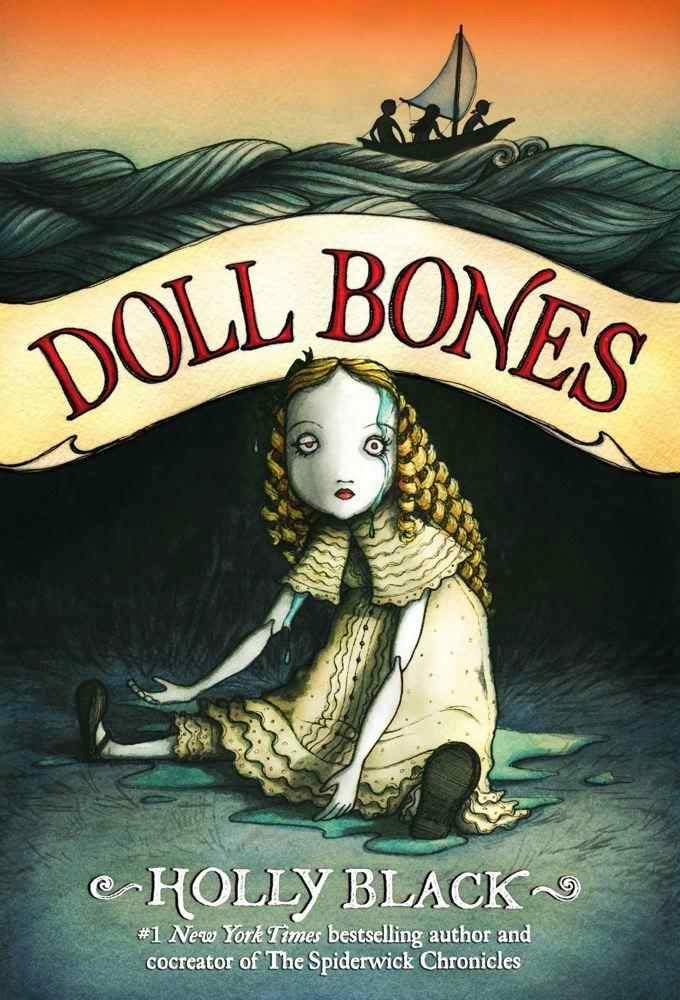
We really liked the format of our Mock Newbery book club this year. Each student committed to reading five books from our list of ten books, but we read them at our own pace. We did this because we only had two copies of each book, but I loved the side effects. Kids took their reading suggestions from each other, listening to what others raved about. Some got "buzz" and others fell flat. Our students came back raving about Serafina's Promise, but none really responded to Doll Bones. I would have never predicted that.
Serafina's Promise
by Ann E. Burg
Scholastic, 2013
*best new book*
ages 9-13
Amazon
your public library
Serafina dreams of becoming a doctor, but she knows that she must go to school to reach her dream. This is no easy feat in modern rural Haiti. How can she do this when her mother needs her help at home, especially with a new baby on the way? Ann E. Burg writes in free verse poetry, conveying Serafina's struggles in sparse, effective language.

Teachers and librarians might find these two resources interesting:


Our students were immediately drawn to Serafina and could connect with her situation, even though it was so different from their own. Several connected it to Inside Out & Back Again by Thanhha Lai, a Newbery Honor book from 2012 -- partly because of the use of free verse poetry, but also because of the way both drew readers into a character's situation.
Ben expressed surprise that Burg "got us hooked on the situation so quickly through poetry." 
Our group agreed that the setting was also a definite strength of Serafina's Promise. Not only could they could imagine being in Haiti, several talked about what an integral part of the story the setting was.
"With some books, it could happen anywhere. With this, you knew it was definitely happening in Haiti." 
I particularly liked the way Burg used Creole phrases throughout, and I know that the first person voice helped kids connect to Serafina's character.
Doll Bones
by Holly Black
with illustrations by Eliza Wheeler
Margaret K. McElderry / Simon & Schuster, p2013
ages 9-12
Amazon
your public library
Best friends Zach, Poppy and Alice struggle to balance their childhood games with new interests in middle school. Holly Black captures the inner emotional journeys of these friends as they come together to solve the mystery of the Queen, an antique doll that Poppy swears is made from the bones of a murdered girl.

I was surprised that this fantasy didn't grab our readers more. It's not that they didn't like it; rather, it just didn't affect them much. I'm guessing that even though the cover is creepy, the story wasn't as scary as something like Coraline. And the emotional aspects didn't resonate with our ten year olds. Perhaps it will connect to a middle school audience more--twelve and thirteen year olds who can relate to the tension between childhood games and adolescent social pressures.

Many thanks to Scholastic and Simon and Schuster for sharing review copies with us. If you make a purchase using the Amazon links on this site, a small portion goes to Great Kid Books (at no cost to you!). Thank you for your support.

©2014 Mary Ann Scheuer, Great Kid Books

Thursday, January 16, 2014

Mock Newbery discussions at Emerson: Part 2

You know what's one of the best things? Listening to a kid talk about how excited she is reading a book, and then watching three others want to try it out themselves. Best thing in the world.

Our book club started off in September excited to read "for the Newbery", seeing what they thought of the best books that were published this year. Two early favorites were Flora & Ulysses, by Kate DiCamillo, and "The President Has Been Shot!", by James Swanson.
Flora and Ulysses:
The Illuminated Adventures
by Kate DiCamillo
illustrated by K.G. Campbell
Candlewick, 2013
ages 8-12
Amazon
your public library
*best new book*
Within a week of launching into our Newbery reading, kids came bounding into the library raving about Flora and Ulysses. They loved it from the get-go and convinced friends to try it out. As Flora would say, "Holy bagumba! It was a hit!" But why, we wondered?

Although Flora claims to be a cynic, it's clear that she has a true heart and good spirit from the moment that she rescues the squirrel from its catastrophic encounter with a powerful vacuum cleaner. She is, most certainly, a hero we're rooting for. Kids like her. They like her spunk, her bravery, her observations.

Students loved that it was full of unexpected and unrealistic moments. Bella E. said that she liked the fact the squirrel crashed into the window because it makes the story more realistic. She also noted how well DiCamillo played the scene for humor as well. And yet, others noted, it was full of very realistic relationships and emotions. Julia said,
"You thought it would be just all wacky and silly, but it was actually deeper than I thought it was going to be."
The supporting characters were definitely a highlight for many of our readers. Several mentioned William Spiver, Flora's quirky neighbor. They liked the way he was fleshed out as a character, even though he wasn't a main character.

The big question will be whether Flora & Ulysses stays with our readers through all the other reading they do.
"The President Has Been Shot!":
The assassination of John F. Kennedy
by James L. Swanson
Scholastic, 2013
ages 9-14
Amazon
your local library
*best new book*
Swanson adapted his adult nonfiction account of Kennedy's assassination, End of Days, for a young adult audience. Our readers were very impressed by the balance of facts and drama in this account of this pivotal event. As Bella N. said,
"I felt that even though it was nonfiction, it wasn’t just a list of facts. Usually I really don’t like nonfiction. But this was like a story."
Swanson begins with a relatively brief introduction, encapsulating Kennedy's rise to power and the key moments of his presidency. The focus quickly shifts to Kennedy's final days. Swanson deftly moves from Kennedy's travels to Dallas and desire to ride in an open-top car, to Lee Harvey Oswald's background and how it might have created motive. Throughout, Swanson presents photographs, diagrams and different accounts of what happened to lead to this moment.

All our book club members agreed that the strength of this book was in the different perspectives Swanson considered. One moment, readers are taken right to the window where Lee Harvey Oswald peered out, overlooking the parade route. The next moment, we are standing next to an observer as he is filming the parade on his home movie camera. Swanson brings readers right into these scenes, while keeping the pace of the story going.

We were all surprised how exciting the story was, especially since you know the outcome. Swanson's gripping storytelling hooked many readers. Ben said, "This was really fast paced. I read it super-quickly because I just didn’t want to put it down. It was a really interesting story."

I raised my concern that Swanson clearly admires John and Jackie Kennedy so much that his writing moves away from unbiased reporting to gushing praise, but our fifth graders felt that the dramatic writing was a more important quality to consider. Hmm...

More to come!

Many thanks to Candlewick and Scholastic for sharing review copies with us. If you make a purchase using the Amazon links on this site, a small portion goes to Great Kid Books (at no cost to you!). Thank you for your support.

©2014 Mary Ann Scheuer, Great Kid Books