As I continue to celebrate 10 years of blogging, I want to turn to books that encourage us to speak our truths. While books can't change the world, they can help give us the courage to stay true to our beliefs, to do the right thing in difficult situations. These stories focus on young people courageously speaking up for themselves in the face of difficulties.
Anger Is a Gift, by Mark Oshiro: Black teen Moss struggles with panic attacks and anxiety, a result of his father's death from police brutality six years earlier in Oakland, CA. When school administrators bring armed police in for random locker searches and install metal detectors, Moss and his friends organize a protest. I especially appreciated how Oshiro balances Moss's personal journey and the way his community comes together to protest the authoritarian administration. A powerful book, with an authentic local setting, for fans of The Hate U Give. (ages 14-18)
Front Desk, by Kelly Yang: Mia's family has recently immigrated from China, and finding a steady job has been really tough for her parents. When an opportunity to manage a motel comes their way, they leap at it. Mia's excited that she can help out, managing the front desk while her parents clean the rooms. Kelly Yang bases this story on her own experience, immigrating from China to Los Angeles. She weaves humor and compassion into her story, speaking from her personal experience to frankly address poverty, bullying and the importance of family. (ages 8-12)
Ghost Boys, by Jewell Parker Rhodes: After being killed by a white police officer, a 12 year old black boy returns as a ghost to process what has happened and how it is affecting his family. The ghost of Emmett Till, a black boy murdered in 1955, and other "ghost boys" who have been murdered, help Jerome understand the larger historical context. The chapters jump back and forth in time, weaving together the social and political framework to help young readers grapple with the impact of police violence on communities of color. (ages 10-15)
I Have the Right To: A High School Survivor's Story of Sexual Assault, Justice, and Hope, by Chessy Prout: As a freshman at St. Paul’s School in New Hampshire, Chessy Prout was sexually assaulted by an upperclassman. In her raw and honest memoir, Prout shares her experience of assault and the subsequent journey with the tumultuous trial, media attention and search for healing and change. As I read this, I was particularly angered by the way the school resisted Chessy's search for justice and struck by how the legal system does not help our young people find the resolution they need. A powerful memoir. (ages 13-18)
#Notyourprincess: Voices of Native American Women, by Lisa Charleyboy: This anthology shares the voices, art, poetry, and insight of modern Native women about their life experiences--the good and the bad, the joyous and the painful--creating a powerful message of the importance of speaking the truth and being visible in a culture that it so often dismissive or manipulative. I especially appreciate the wide diversity of Native women that is represented here. Brilliant and moving collection. (ages 12-18)
The Prince and the Dressmaker, by Jen Wang: Prince Sebastian feels comfortable identifying both male and female, often wearing dresses and going out as his alter ego, Lady Crystallia. When he hires Frances, a young seamstress, to make him a wardrobe of boldly beautiful, dazzling dresses, Frances hesitates at first, but they soon discover a shared passion for fashion. Incorporating the feel of classic fairytales, Wang creates a story that revolves around friendship, following your dreams and speaking your truth. (ages 10-15)
The Poet X, by Elizabeth Acevedo: A first-generation Dominican-American, fifteen-year-old Xiomara struggles balancing her mother’s strict Catholicism with her own desire to find her place in the world. Writing poetry helps Xio come into her own, channelling her feelings, worries and questions in her journal, as she explores her blossoming romance with Aman, her science partner. As Xio starts figuring out how she can stand up for what she believes, she discovers the power of her voice through the poetry club at school. This powerful coming-of-age story poignantly speaks to teens finding their voice. (ages 13-18)
Stella Diaz Has Something to Say, by Angela Dominguez: Stella is shy, self-conscious about her accent and the way she jumbles Spanish and English when she can't find the right word. As third grade starts, she's also worried about being in a different class from her best friend Jenny. I especially appreciate how Stella's Mexican-American family supports her and cheers her on as she discovers her courage and voice. (ages 7-10)
Swing, by Kwame Alexander: Noah, Walt and Sam (Samantha) have been best friends since elementary school, but ever since they got to high school, Noah hasn't been able to figure out how to tell Sam that he really likes her. No matter how much Walt (aka Swing) encourages him to take a chance, Noah struggles to express his feelings for Sam. Inspired by love letters he finds in a thrift store, Noah finally starts to put his feelings onto paper using both art and poetry. While I related to Noah, I was utterly charmed by Swing's humor and optimism. Readers will want to talk when they reach the end--be there for them, as they find their voice about the larger issues impacting our society. (ages 13-18)
The Witch Boy, by Molly Ostertag: This graphic novel will appeal to readers with its magical setting and strong protagonist. In Aster's village, there are very clear expectations: girls will learn witchcraft and spells, while boys will learn to become shapeshifters. Yet Aster yearns to learn the spells that his sister is perfecting, and is not interested in the other boy's aggressive play. When several boys go missing, Aster tries to use his developing magical abilities to solve the mystery. I especially appreciated the way Aster questions society's gender expectations and stays true to himself. A delightful graphic novel -- I'm looking forward to reading the sequel, The Hidden Witch, which has just come out. (ages 8-12)
If you make a purchase using the Amazon links on this site, a small portion goes to Great Kid Books. Thank you for your support.
©2018 Mary Ann Scheuer, Great Kid Books
Wednesday, December 12, 2018
Tuesday, December 11, 2018
Ten winning sports books for kids (ages 5-14)
Whether you play sports with your kids or love watching games together, you’ll have fun sharing these books. You'll find a balance of nonfiction and fiction and a wide range of sports. One thing I'm noticing is that I haven't read as many novels with girls playing sports -- clearly, that's a goal for 2019!
Nonfiction
Baseball: Then to Wow! by the editors of Sports Illustrated Kids: Whether it’s looking at changes in equipment or comparing playing styles then and now, this high-interest book provides opportunities for fans to analyze different aspects of the game. Great layout, photographs and illustrations engage kids and help them see the progression of the game over the past 150 years. (ages 7-12)
Between the Lines: How Ernie Barnes Went from the Football Field to the Art Gallery, by Sandra Neil Wallace, illustrated by Bryan Collier: Although his athletic skills brought Ernie Barnes success as a professional football player, his true passion was art. He would quickly sketch scenes as he sat on the bench between plays. Barnes pursued his dreams, eventually becoming the official artist for the American Football League. (ages 6-10)
Girl Running: Bobbi Gibb and the Boston Marathon, by Annette Bay Pimentel, illustrated by Micha Archer: In 1966, Bobbi Gibb became the first woman to run the Boston Marathon, even though the authorities would not recognize her efforts. Despite the authorities’ rejection, she decides to run alongside the registered racers, determined to prove that the rules were wrong. An inspiring picture book biography of defying the odds. (ages 5-9)
Proud: Living My American Dream, by Ibtihaj Muhammad: U.S. Olympic fencing medalist, Ibtihaj Muhammad shares her inspiring memoir, showing how faith, hard work and determination helped her reach her goals. She frankly talks about the many obstacles she faced, yet she comes across as both humble and realistic. She conveys the excitement of winning, and the frustrations and self-doubt she faced. Even though I know nothing about fencing, I couldn't put this down. Ibtihaj is a true American hero. (ages 10-16)
Rising Above: How 11 Athletes Overcame Challenges in Their Youth to Become Stars, by Gregory Zuckerman with Elijah Zuckerman and Gabriel Zuckerman: Names like Lebron James, Steph Curry, Tim Howard, & Dwyane Wade will pull in young readers. Strong, accessible writing and inspiring stories will keep them reading. Look for the second in this series, focusing on inspiring women in sports. (ages 10-14)
Pedro’s Big Goal, by Fran Manushkin, illustrated by Tammie Lyon (Picture Window / Capstone; ages 5-8; $4.95; 32 pp.). First grader Pedro LOVES playing soccer with his friends and dreams of playing goalie. Will he make it as his team’s goalie, or is he too small? Beginning readers will enjoy this fun, accessible series -- perfect for 1st and 2nd graders. (ages 5-8)
The San Francisco Splash, by David A. Kelley, illustrated by Mark Meyers: The Ballpark Mysteries series is great for emerging readers who need short chapter books, and this local story does not disappoint. Cousins Kate and Mike love it when Kate’s sports-reporter mom brings them to a game, and here they start in kayaks out in McCovey Cove trying to catch fly balls. (ages 6-10)
Middle grade & young adult fiction
After the Shot Drops, by Randy Ribay: When high school basketball star "Bunny" Thompson transfers to wealthy private school, where he is one of a handful of black students. Bunny struggles to keep true to himself, stay close to his neighborhood friends, and make new friends at school. Meanwhile, his best friend Nasir struggles with feeling left behind and figuring out what to do when his cousin starts getting into trouble. The conflicts escalate, on the court and off, with an explosive climax. Hand this to fans of The Hate U Give and Ghost. (ages 13-18)
Ghost (Track #1), by Jason Reynolds: BOOM! Third time reading this and it still pulls me straight through each time. A 5th grader told me: "I loved how you feel like you're Ghost. You get mad at someone, then forgive them. It feels like your emotions are building up until Ghost takes the shoes. Then they break when his coach brings him back to the store." Catch others in this stand-out series: Patina & Sunny. (ages 9-14)
Rebound, by Kwame Alexander: My students clamored to read Kwame Alexander’s The Crossover, and this prequel is outstanding, with Chuck Bell--Josh & Jordan’s father--taking center stage. Kwame creates a great cast of characters in Rebound, with Charlie's family and close friends. I especially love that two of his close friends are girls. CJ is brainy, sassy and sweet. Roxie can play ball better than most of the boys. Full of humor, heart and poetry slam in comics (!!), this novel in verse is really about how we can hold onto hope even though we feel storm-beaten and shattered. (ages 9-14)
If you make a purchase using the Amazon links on this site, a small portion goes to Great Kid Books. Thank you for your support.
©2018 Mary Ann Scheuer, Great Kid Books
Nonfiction
Baseball: Then to Wow! by the editors of Sports Illustrated Kids: Whether it’s looking at changes in equipment or comparing playing styles then and now, this high-interest book provides opportunities for fans to analyze different aspects of the game. Great layout, photographs and illustrations engage kids and help them see the progression of the game over the past 150 years. (ages 7-12)
Between the Lines: How Ernie Barnes Went from the Football Field to the Art Gallery, by Sandra Neil Wallace, illustrated by Bryan Collier: Although his athletic skills brought Ernie Barnes success as a professional football player, his true passion was art. He would quickly sketch scenes as he sat on the bench between plays. Barnes pursued his dreams, eventually becoming the official artist for the American Football League. (ages 6-10)
Girl Running: Bobbi Gibb and the Boston Marathon, by Annette Bay Pimentel, illustrated by Micha Archer: In 1966, Bobbi Gibb became the first woman to run the Boston Marathon, even though the authorities would not recognize her efforts. Despite the authorities’ rejection, she decides to run alongside the registered racers, determined to prove that the rules were wrong. An inspiring picture book biography of defying the odds. (ages 5-9)Proud: Living My American Dream, by Ibtihaj Muhammad: U.S. Olympic fencing medalist, Ibtihaj Muhammad shares her inspiring memoir, showing how faith, hard work and determination helped her reach her goals. She frankly talks about the many obstacles she faced, yet she comes across as both humble and realistic. She conveys the excitement of winning, and the frustrations and self-doubt she faced. Even though I know nothing about fencing, I couldn't put this down. Ibtihaj is a true American hero. (ages 10-16)
Fiction for young players
Pedro’s Big Goal, by Fran Manushkin, illustrated by Tammie Lyon (Picture Window / Capstone; ages 5-8; $4.95; 32 pp.). First grader Pedro LOVES playing soccer with his friends and dreams of playing goalie. Will he make it as his team’s goalie, or is he too small? Beginning readers will enjoy this fun, accessible series -- perfect for 1st and 2nd graders. (ages 5-8)
The San Francisco Splash, by David A. Kelley, illustrated by Mark Meyers: The Ballpark Mysteries series is great for emerging readers who need short chapter books, and this local story does not disappoint. Cousins Kate and Mike love it when Kate’s sports-reporter mom brings them to a game, and here they start in kayaks out in McCovey Cove trying to catch fly balls. (ages 6-10)
Middle grade & young adult fiction
After the Shot Drops, by Randy Ribay: When high school basketball star "Bunny" Thompson transfers to wealthy private school, where he is one of a handful of black students. Bunny struggles to keep true to himself, stay close to his neighborhood friends, and make new friends at school. Meanwhile, his best friend Nasir struggles with feeling left behind and figuring out what to do when his cousin starts getting into trouble. The conflicts escalate, on the court and off, with an explosive climax. Hand this to fans of The Hate U Give and Ghost. (ages 13-18)
Ghost (Track #1), by Jason Reynolds: BOOM! Third time reading this and it still pulls me straight through each time. A 5th grader told me: "I loved how you feel like you're Ghost. You get mad at someone, then forgive them. It feels like your emotions are building up until Ghost takes the shoes. Then they break when his coach brings him back to the store." Catch others in this stand-out series: Patina & Sunny. (ages 9-14)
Rebound, by Kwame Alexander: My students clamored to read Kwame Alexander’s The Crossover, and this prequel is outstanding, with Chuck Bell--Josh & Jordan’s father--taking center stage. Kwame creates a great cast of characters in Rebound, with Charlie's family and close friends. I especially love that two of his close friends are girls. CJ is brainy, sassy and sweet. Roxie can play ball better than most of the boys. Full of humor, heart and poetry slam in comics (!!), this novel in verse is really about how we can hold onto hope even though we feel storm-beaten and shattered. (ages 9-14)
If you make a purchase using the Amazon links on this site, a small portion goes to Great Kid Books. Thank you for your support.
©2018 Mary Ann Scheuer, Great Kid Books
Labels:
ages 12-14,
ages 12+,
ages 5-8,
ages 8-12,
best new book,
friendship,
nonfiction,
realistic fiction,
young adult
Monday, December 10, 2018
Ten terrific fantasy books (ages 4-14)
Many students are drawn to fantasies with richly imagined worlds. Here are some favorites for a wide range of ages -- enjoy getting lost in these wonderful worlds. This is an eclectic mix of picture books, graphic novels, middle grade novels and young adult fantasies. To explore a wider range, check out my Goodreads fantasy shelf.
As you look for fantasy books for children, please pay special attention to the variety of characters, legends and racial/ethnic groups represented.
Picture books
Journey, by Aaron Becker: In this sweeping wordless picture book, a lonely girl escapes to a magical world with the help of a red crayon. She travels through several worlds, friendly and hostile, discovering her inner strength as she escapes an army of warlords. Lush illustrations bring these imaginative worlds vividly to life.
The Man in the Moon, by William Joyce: This gorgeous, imaginative picture book opens the series for the Guardians of Childhood, introducing readers to the fantastical legend of the Man in the Moon (MiM). When the wicked Pitch, the King of Nightmares, kills MiM’s parents in an epic battle, the baby MiM is whisked to safety by his guardian Nightlight. As MiM grows up, he is determined to watch over the children of Earth, like Nightlight watched over him.
Ocean Meets Sky, by Terry Fan and Eric Fan: In honor of his grandfather who has passed away, young Finn builds a boat for the journey they always wanted to take. Finn then crawls inside to sleep and dreams of a massive golden fish who takes him on a journey, in search of the magical land of his grandfather’s stories. Filled with atmospheric blend of Asian imagery and dreamlike fantasy worlds, this beautiful, magical picture book immerses readers into a young boy’s search for healing.
Middle Grade Novels
Aru Shah and the End of Time, by Roshani Chokshi: When 7th grader Aru Shah lights the cursed Lamp of Bharata in her mother’s museum, she is thrown into the world of Hindu gods and mythical characters. Aru discovers she has been born with the soul of a Pandava brother, and she must use her powers to defeat the Lord of Darkness. Chokshi draws readers into an immersive world intertwining Hindu folklore, feminist outlook and action-packed thrills.
Endling: The Last, by Katherine Applegate: Perfect for fans of Erin Hunter’s Warriors series, Endling layers excitement, fantasy and probing questions about survival. Byx, a young dairne (imagine a human/dog mix), must survive alone after her entire clan is murdered by the power-hungry humans. With the help of two new friends, she seeks answers and the mythic Dairneholm in this epic fantasy novel.
Where the Mountain Meets the Moon, by Grace Lin: Grace Lin blends Chinese folktales with an epic quest in this enchanting novel. Like her father, Minli is a dreamer and loves stories. Hoping to bring her family good fortune, she seeks the Old Man of the Moon, for he might be able to share his secrets with her. Lovely illustrations intersperse the main action and folktales, all influenced by traditional Chinese stories and art. Readers will be inspired by Minli’s courage, loyalty and quick thinking.
Graphic Novels
Chasma Knights, by Boya Sun and Kate Reed Petty: In this delightful graphic novel, Knights can “catalyze” with their toys, merging and mind-melding their powers. Young readers will empathize with outcast Beryl, who yearns to catalyze with toys, and imagine ways their toys can come to life in this inventive story.
Princeless #1: Save Yourself, by Jeremy Whitley, illustrated by M. Goodwin: When Princess Adrienne’s parents lock her away in a castle guarded by a dragon to await rescue by a prince, she decides to take matters into her own hands. I love this feisty heroine--we have so few stories with characters of color, where race isn’t an issue. Readers are able to enjoy classic fairy tale setting in this graphic novel, while turning so many stereotypes and tropes on their heads.
Young Adult fantasies
Children of Blood and Bone, by Tomi Adeyemi: Seventeen-year-old Zélie must save her community of diviners from the king's vengeful genocide in this exciting blockbuster debut. I was captivated by the richly drawn fantasy world full of West Africa imagery, but the action-packed chase and shifting allegiances are what kept me hooked. The Legacy of OrÏsha will continue next spring, as Adeyemi releases the second in the series: Children of Virtue and Vengeance.
Warcross, by Marie Lu: Combining fast-action video game battles with intriguing underworld mysteries, Marie Lu hooks readers with a perfect series-opener. Emika Chen hacks into the immersive virtual reality game Warcross championship games, but instead of getting into trouble, she's invited to meet the game's creator, who's picked her for a top-secret job. As she uncovers a sinister plot, Emi must choose whom to trust. "Absolutely immersive. Cannot put this down," is what I wrote to myself as I zoomed through this.
©2018 Mary Ann Scheuer, Great Kid Books
As you look for fantasy books for children, please pay special attention to the variety of characters, legends and racial/ethnic groups represented.
Picture books
Journey, by Aaron Becker: In this sweeping wordless picture book, a lonely girl escapes to a magical world with the help of a red crayon. She travels through several worlds, friendly and hostile, discovering her inner strength as she escapes an army of warlords. Lush illustrations bring these imaginative worlds vividly to life.
The Man in the Moon, by William Joyce: This gorgeous, imaginative picture book opens the series for the Guardians of Childhood, introducing readers to the fantastical legend of the Man in the Moon (MiM). When the wicked Pitch, the King of Nightmares, kills MiM’s parents in an epic battle, the baby MiM is whisked to safety by his guardian Nightlight. As MiM grows up, he is determined to watch over the children of Earth, like Nightlight watched over him.
Ocean Meets Sky, by Terry Fan and Eric Fan: In honor of his grandfather who has passed away, young Finn builds a boat for the journey they always wanted to take. Finn then crawls inside to sleep and dreams of a massive golden fish who takes him on a journey, in search of the magical land of his grandfather’s stories. Filled with atmospheric blend of Asian imagery and dreamlike fantasy worlds, this beautiful, magical picture book immerses readers into a young boy’s search for healing.
Middle Grade Novels
Aru Shah and the End of Time, by Roshani Chokshi: When 7th grader Aru Shah lights the cursed Lamp of Bharata in her mother’s museum, she is thrown into the world of Hindu gods and mythical characters. Aru discovers she has been born with the soul of a Pandava brother, and she must use her powers to defeat the Lord of Darkness. Chokshi draws readers into an immersive world intertwining Hindu folklore, feminist outlook and action-packed thrills.
Endling: The Last, by Katherine Applegate: Perfect for fans of Erin Hunter’s Warriors series, Endling layers excitement, fantasy and probing questions about survival. Byx, a young dairne (imagine a human/dog mix), must survive alone after her entire clan is murdered by the power-hungry humans. With the help of two new friends, she seeks answers and the mythic Dairneholm in this epic fantasy novel.
Where the Mountain Meets the Moon, by Grace Lin: Grace Lin blends Chinese folktales with an epic quest in this enchanting novel. Like her father, Minli is a dreamer and loves stories. Hoping to bring her family good fortune, she seeks the Old Man of the Moon, for he might be able to share his secrets with her. Lovely illustrations intersperse the main action and folktales, all influenced by traditional Chinese stories and art. Readers will be inspired by Minli’s courage, loyalty and quick thinking.
Graphic Novels
Chasma Knights, by Boya Sun and Kate Reed Petty: In this delightful graphic novel, Knights can “catalyze” with their toys, merging and mind-melding their powers. Young readers will empathize with outcast Beryl, who yearns to catalyze with toys, and imagine ways their toys can come to life in this inventive story.Princeless #1: Save Yourself, by Jeremy Whitley, illustrated by M. Goodwin: When Princess Adrienne’s parents lock her away in a castle guarded by a dragon to await rescue by a prince, she decides to take matters into her own hands. I love this feisty heroine--we have so few stories with characters of color, where race isn’t an issue. Readers are able to enjoy classic fairy tale setting in this graphic novel, while turning so many stereotypes and tropes on their heads.
Young Adult fantasies
Children of Blood and Bone, by Tomi Adeyemi: Seventeen-year-old Zélie must save her community of diviners from the king's vengeful genocide in this exciting blockbuster debut. I was captivated by the richly drawn fantasy world full of West Africa imagery, but the action-packed chase and shifting allegiances are what kept me hooked. The Legacy of OrÏsha will continue next spring, as Adeyemi releases the second in the series: Children of Virtue and Vengeance.
Warcross, by Marie Lu: Combining fast-action video game battles with intriguing underworld mysteries, Marie Lu hooks readers with a perfect series-opener. Emika Chen hacks into the immersive virtual reality game Warcross championship games, but instead of getting into trouble, she's invited to meet the game's creator, who's picked her for a top-secret job. As she uncovers a sinister plot, Emi must choose whom to trust. "Absolutely immersive. Cannot put this down," is what I wrote to myself as I zoomed through this.
©2018 Mary Ann Scheuer, Great Kid Books
Labels:
ages 12-14,
ages 12+,
ages 5-8,
ages 8-12,
best new book,
fantasy,
young adult
Sunday, December 9, 2018
A season for celebrating! 10 years of Great Kid Books
Ten years ago, I started this website as a place to share book recommendations with parents. I wanted to tell parents not only about books I loved, but also ones I saw children responding to.
I was struck by how often I felt overwhelmed as a young parent, looking for books for my children. They were drawn to familiar series and characters, often those they recognized from TV. I recognized classics. But how could I sort through the hundreds of new books for children, and know what they would enjoy?
Over the past ten years, I have written over 1,000 posts sharing books for children ages 4 to 14. This has brought me great joy and has broadened my own world immensely. I am so grateful to the authors and illustrators who create wonderful books for children. I also appreciate the kidlit community of librarians and bloggers that I have found both online and in person.
To celebrate, I will be sharing ten lists this season, each with ten terrific titles both new and old. I will also be randomly giving away books to share -- so please leave comments about what books you are excited to share with young readers in your life. I'll link here as the posts go live.
Thank you, dear readers, for your patience this fall. I've started a new job as the librarian at Albany High School, just north of Berkeley, CA. It's exciting to be in a new school, and it's taken a huge amount of energy to step into this new role. I have had to write less here, as I spend more time teaching, planning and grading at the high school.
Above all else, thank you my readers for encouraging me, for recognizing the importance of sharing books with young readers.
©2018 Mary Ann Scheuer, Great Kid Books
I was struck by how often I felt overwhelmed as a young parent, looking for books for my children. They were drawn to familiar series and characters, often those they recognized from TV. I recognized classics. But how could I sort through the hundreds of new books for children, and know what they would enjoy?
Over the past ten years, I have written over 1,000 posts sharing books for children ages 4 to 14. This has brought me great joy and has broadened my own world immensely. I am so grateful to the authors and illustrators who create wonderful books for children. I also appreciate the kidlit community of librarians and bloggers that I have found both online and in person.
To celebrate, I will be sharing ten lists this season, each with ten terrific titles both new and old. I will also be randomly giving away books to share -- so please leave comments about what books you are excited to share with young readers in your life. I'll link here as the posts go live.
- Ten terrific fantasy books
- Ten winning sports books
- Ten top books for speaking your truth
- Ten outstanding audiobooks
- Ten terrific chapter books for growing readers
- Ten favorite picture books
- Ten funny books to get you laughing
- Ten graphic novels to read again & again
- Ten swoon-worthy first romances
- Ten inspiring biographies & memoirs
Thank you, dear readers, for your patience this fall. I've started a new job as the librarian at Albany High School, just north of Berkeley, CA. It's exciting to be in a new school, and it's taken a huge amount of energy to step into this new role. I have had to write less here, as I spend more time teaching, planning and grading at the high school.
Above all else, thank you my readers for encouraging me, for recognizing the importance of sharing books with young readers.
©2018 Mary Ann Scheuer, Great Kid Books
Wednesday, October 3, 2018
Lowriders Blast from the Past, by Cathy Camper & Raul the Third -- outstanding graphic novel (ages 8-14)
Do you have kids who love cars? Who doodle and draw all the time? Who only read graphic novels? You'll want to race out to get Lowriders Blast from the Past, the newest graphic novel from Cathy Camper and Raul the Third. Not only does this celebrate Latinx lowrider culture, it turns cultural expectations on its head with Lupe's girl-power & fixit prowess.
As we celebrate Latinx and Hispanic Heritage Month, you'll definitely want to highlight this series. My students especially appreciate the mashup of cultures, the humor and the Spanish slang.
But when Elirio is bullied by Las Matamoscas, the local gang, he feels alone and helpless, until he meets two new friends, Flapjack and Lupe. Flapjack is a sweet little octopus who's always willing to lend a hand (or eight). And Lupe can fix anything, especially bicycles and cars.
I especially appreciate how this series turns cultural expectations upside down. Not only is Lupe a fixit whiz, her Mamá Impala runs the junk store, and her Mamá Gazelle runs a papel picado workshop.
Elirio, Flapjack and Lupe are excited to go to Señor Bufolardo's car show. The bullies won't leave the younger kids alone--and they insist that girls can't be in car shows. Will the friends figure out how to get their mamas' car entered, or will the bullies win?
If you like this, you'll also want to get the first two in the series:
Raul the Third won the 2017 Pura Belpré Illustrator Award for Lowriders to the Center of the Earth, honored for his "energetic ballpoint pen drawings portray a complex mash-up of cultures with humor and verve," as the committee chair Eva Mitnick said.
Illustrations copyright ©2018 Raul the Third, shared by permission of the publishers. The review copy was kindly sent by the publisher, Chronicle Books. If you make a purchase using the Amazon links on this site, a small portion goes to Great Kid Books. Thank you for your support.
©2018 Mary Ann Scheuer, Great Kid Books
As we celebrate Latinx and Hispanic Heritage Month, you'll definitely want to highlight this series. My students especially appreciate the mashup of cultures, the humor and the Spanish slang.
Lowriders Blast from the PastThis story brings us back to the origins of Lupe, Flapjack and Elirio's friendship. Mosquito Elirio loves painting more than anything else, especially mixing words with art. He paints giant murals on an alley wall near his home.
by Cathy Camper and Raul the Third
Chronicle, 2018
Amazon / Your local library
ages 8-14
| "This alley wall is my secret studio. It's like my own museum." |
I especially appreciate how this series turns cultural expectations upside down. Not only is Lupe a fixit whiz, her Mamá Impala runs the junk store, and her Mamá Gazelle runs a papel picado workshop.
| "Mama Gazelle's workshop is pretty awesome, right? Want to watch me fix your bike?" |
If you like this, you'll also want to get the first two in the series:
Raul the Third won the 2017 Pura Belpré Illustrator Award for Lowriders to the Center of the Earth, honored for his "energetic ballpoint pen drawings portray a complex mash-up of cultures with humor and verve," as the committee chair Eva Mitnick said.
Illustrations copyright ©2018 Raul the Third, shared by permission of the publishers. The review copy was kindly sent by the publisher, Chronicle Books. If you make a purchase using the Amazon links on this site, a small portion goes to Great Kid Books. Thank you for your support.
©2018 Mary Ann Scheuer, Great Kid Books
Labels:
ages 12-14,
ages 12+,
ages 8-12,
graphic novels
Sunday, September 30, 2018
Tackling Issues: an interview with Katherine Applegate & Jen Petro-Roy (ages 8-14)
Katherine Applegate is one of my students’ favorite authors. Her books include Home of the Brave and wishtree, both of which center around the experience of young immigrants. Jen Petro-Roy is a vital new voice for young readers. Her debut novel P.S. I Miss You has garnered national attention for centering on young same-sex love. I’m excited to welcome them as we explore how fiction engages kids as they think about difficult subjects.
This conversation came out of our panel together at the Bay Area Book Festival last spring. I am so lucky to know these talented, thoughtful women.
Mary Ann: Katherine, You’ve written for many age levels, from very young children to adults, yet it seems that your sweet spot is middle grade. What draws you to this age group?
Katherine: You’re right that middle grade readers are my favorite audience. Typically that’s defined as children 8 to 12 years of age. Children this age are beginning to think about the wider world. They start asking Big Questions (to the delight and frustration of the adults in their lives): What does fairness mean? Why is there cruelty in the world? What defines who I am? Why did Joey get the biggest meatball?
I just wrote an introduction to an essay collection by the beloved children’s writer, Natalie Babbitt (Barking with the Big Dogs: On Writing and Reading Books for Children, coming out on November 20, 2018). Babbitt is perhaps best known for her remarkable novel for middle grade readers, Tuck Everlasting, which Anne Tyler called “one of the best books ever written -- for any age.”
And what is Tuck about, this little book for children? Immortality. Why we have to die. What matters most in our short and magical lives. All those things we try not to think about . . . and absolutely must think about.
And it’s a book for kids.
That’s why I love writing for middle grade readers.
Mary Ann: You're so right -- kids are really beginning to wrestle with big issues. Jen, what has been your experience?
Jen: In my job as a librarian, I found that kids often sought out books about tough topics. They want to read about kids going through struggles--with homelessness, with difficult family situations, with friend troubles, with illness, and more--because they are often going through the same struggles themselves.
When I'm reading, it’s reassuring to see that I’m not the only one going through a specific situation...and it’s even more reassuring to see that characters can find their way through, triumph, and thrive. For kids, this is an even more necessary process, because they don’t have as much life experience. They need to see that representation on the page and they truly want to. It makes them feel so much less alone...and isn’t that one of the aims of literature?
Katherine: I love your point about literature helping us feel less, alone, Jen. That’s probably the greatest gift books can give us. That, and helping us make sense of a world that doesn’t always make sense. (That’s particularly true lately.)
Mary Ann: Jen, can you tell us a little bit about the issues Evie has to wrestle with in P.S. I Miss You?
Jen: After being raised in a very Catholic family, Evie starts to question the beliefs of her parents after her older sister gets pregnant and Evie herself gets her first crush on a girl. Teen pregnancy, religion, and sexuality are definitely three “tough issues” and many have questioned why I raised them in a middle-grade novel. For me, though, this was exactly the place to raise it, because middle school is the time when kids start to question the world, who they are, and how they were raised. It’s so important that these kids can see themselves now, and don’t have to wait until they’re teens or even adults to see themselves represented in literature. At the same time, though, I love hearing about teenagers and adults reading P.S. I Miss You. I think it helps different age groups in different ways.
Mary Ann: Have you heard from young readers about the tough issues you bring up in your books? How have they reacted? What do they find powerful?
Jen: Hearing from and interacting with readers is my absolute favorite part of this job. I’ve heard from a bunch so far about how wonderful it is to see representation of different sexualities in books for their age group. After one of my school visits, I had a girl come up to me and share that she’s a queer middle schooler with a brother about to go off to college, and she really related to Evie, who writes letters to her older sister Cilla. I am so proud to be able to help people feel a little bit less alone.
Mary Ann: Katherine, with wishtree you tackle tough issues around immigration and racism, and yet you do this in a way that 3nd graders can relate to. Do you keep the age of your audience in mind while you write?
Katherine: I do, very much so. (Although I know many writers for children who say the age of the audience doesn’t figure into their writing.) School visits have helped me a lot in this regard. I see the innocence and the honesty in younger readers, and I try to write what they need to hear. If it works for other ages, great.
Mary Ann: One of my students, Clara, told me that books “give kids an idea of how the world can be and how we can change it.” Katherine, while Endling is clearly fantasy, what are you hoping that readers think about while they read it?
Katherine: Endling is a fantasy about the last individual in a doglike species. Here in the real world, we’re in the midst of what is often referred to as the Sixth Extinction, a huge loss of species that seems to be almost entirely the result of human behavior. I wanted to touch on that, but in a way that I hope is accessible to younger readers.
Mary Ann: What do you think parents or teachers are afraid of when they push back against “heavy” or “mature” books for kids?
Jen: As a parent myself, I can understand the impulse to shield kids from tough issues. The world is scary, and it’s even more frightening to think of innocence being shattered. I wish the world was perfect for my daughters, and I wish they could believe it was so. So when parents push back, I think a lot of that impulse comes from fear or the desire to avoid discomfort. It’s hard to imagine explaining things like school shootings or death to children, so it can be easier to avoid the topic entirely. And for issues that parents or teachers don’t believe in, it may be “easier” to ban books or topics entirely. Out of sight, out of mind, after all. The problem there is that issues never remain out of sight. And when kids don’t know the realities of the world, those realities will be that much harder to deal with in the future. They won’t learn tolerance or acceptance, either.
Katherine: This is why librarians were invented. To get books into the hands of the children who most need them.
Mary Ann: Many of my students are drawn to realistic fiction that deals with tough issues. Why do you think this is? How do stories help us?
Katherine: When you’re in the middle of figuring out your place in the world, it helps to have a map. Books are like GPS for our hearts. They help us navigate the hard stuff.
I’ve had OCD since I was a kid. A book like OCDaniel (by Wesley King) would have changed my life.
I have a trans daughter who’s 21. I wish Alex Gino’s George had been around for her when she needed it.
I know too many young girls on their way to eating disorders. I’d love to get Jen’s upcoming novel, Good Enough, into all their hands.
Jen: Stories help us feel like we’re not alone in the world, that we’re not the only one dealing with certain issues. Readers can think, “Hey, if that character can get through such a difficult situation, maybe I can, too.” Simply seeing that books like this exist can make readers feel a sense of belonging, too. If readers see LGBTQ books in libraries or classrooms or are handed a book by their parents, they will know that those authority figures are safe and accepting. That they can go to them if they need to talk. Books can help facilitate a community of love and acceptance, and I love that about them.
Mary Ann: Jen, can you tell us a little about your upcoming books? With Katherine raving about them, I can't wait to know more!
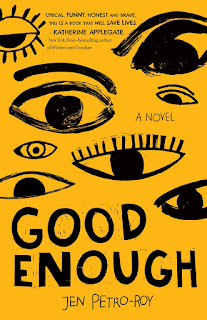
Jen: Absolutely! I have two more books coming out in next year, both out on February 19th. Good Enough is another middle-grade fiction, about a 12-year-old named Riley who has been hospitalized for anorexia nervosa and is struggling to recover amidst parents who don’t understand, a fellow patient who is trying to sabotage Riley, and a gymnastic star sister. I’m so proud of this book, as it was inspired by my own struggle and recovery from anorexia, and there’s not much out there in this area for young readers that is both hopeful and non-triggering. Macmillan/Feiwel & Friends will also be simultaneously releasing You Are Enough, which is a non-fiction guide to eating disorder recovery, body image, and self-esteem for middle-schoolers and teens. Advanced copies of both are starting to make their way in the world!
Katherine: As an early reader, I can offer this spoiler alert: Good Enough is amazing. It belongs in every library.
Mary Ann: I wonder if you can end with any advice for parents about reading.
Jen: Reading is anything your kids want it to be. As a former librarian, I’m familiar with parents steering their children away from books they don’t think are “real literature.” They don’t want their kids to read graphic novels or those easy chapter books with mermaids and puppy dogs on the covers. But any kinds of books are good. Kids thrive when they are reading the books they want, whether it’s a book filled with fart jokes or War and Peace. Let them follow their interests. Let them love the written word.
Katherine: Couldn’t agree with Jen more. Reading is supposed to be fun, people!
I was a reluctant reader myself, and it took me a long time to find my “perfect” book. For me, it was Charlotte's Web. But for your child, it may be a graphic novel. Or non-fiction. Or a picture book. Or a chapter book. Or poetry. Or song lyrics.
It’s all about words. It doesn’t matter how they’re packaged. It only matters how much they’re loved.
Thank you both so much for your time and all of the care and love you pour into your stories. If you make a purchase using the Amazon links on this site, a small portion goes to Great Kid Books. Thank you for your support.
©2018 Mary Ann Scheuer, Great Kid Books
This conversation came out of our panel together at the Bay Area Book Festival last spring. I am so lucky to know these talented, thoughtful women.
Katherine: You’re right that middle grade readers are my favorite audience. Typically that’s defined as children 8 to 12 years of age. Children this age are beginning to think about the wider world. They start asking Big Questions (to the delight and frustration of the adults in their lives): What does fairness mean? Why is there cruelty in the world? What defines who I am? Why did Joey get the biggest meatball?
I just wrote an introduction to an essay collection by the beloved children’s writer, Natalie Babbitt (Barking with the Big Dogs: On Writing and Reading Books for Children, coming out on November 20, 2018). Babbitt is perhaps best known for her remarkable novel for middle grade readers, Tuck Everlasting, which Anne Tyler called “one of the best books ever written -- for any age.”
And what is Tuck about, this little book for children? Immortality. Why we have to die. What matters most in our short and magical lives. All those things we try not to think about . . . and absolutely must think about.
And it’s a book for kids.
That’s why I love writing for middle grade readers.
Mary Ann: You're so right -- kids are really beginning to wrestle with big issues. Jen, what has been your experience?
Jen: In my job as a librarian, I found that kids often sought out books about tough topics. They want to read about kids going through struggles--with homelessness, with difficult family situations, with friend troubles, with illness, and more--because they are often going through the same struggles themselves.
When I'm reading, it’s reassuring to see that I’m not the only one going through a specific situation...and it’s even more reassuring to see that characters can find their way through, triumph, and thrive. For kids, this is an even more necessary process, because they don’t have as much life experience. They need to see that representation on the page and they truly want to. It makes them feel so much less alone...and isn’t that one of the aims of literature?
Katherine: I love your point about literature helping us feel less, alone, Jen. That’s probably the greatest gift books can give us. That, and helping us make sense of a world that doesn’t always make sense. (That’s particularly true lately.)
Mary Ann: Jen, can you tell us a little bit about the issues Evie has to wrestle with in P.S. I Miss You?
Jen: After being raised in a very Catholic family, Evie starts to question the beliefs of her parents after her older sister gets pregnant and Evie herself gets her first crush on a girl. Teen pregnancy, religion, and sexuality are definitely three “tough issues” and many have questioned why I raised them in a middle-grade novel. For me, though, this was exactly the place to raise it, because middle school is the time when kids start to question the world, who they are, and how they were raised. It’s so important that these kids can see themselves now, and don’t have to wait until they’re teens or even adults to see themselves represented in literature. At the same time, though, I love hearing about teenagers and adults reading P.S. I Miss You. I think it helps different age groups in different ways.
Mary Ann: Have you heard from young readers about the tough issues you bring up in your books? How have they reacted? What do they find powerful?
Jen: Hearing from and interacting with readers is my absolute favorite part of this job. I’ve heard from a bunch so far about how wonderful it is to see representation of different sexualities in books for their age group. After one of my school visits, I had a girl come up to me and share that she’s a queer middle schooler with a brother about to go off to college, and she really related to Evie, who writes letters to her older sister Cilla. I am so proud to be able to help people feel a little bit less alone.
Mary Ann: Katherine, with wishtree you tackle tough issues around immigration and racism, and yet you do this in a way that 3nd graders can relate to. Do you keep the age of your audience in mind while you write?
Katherine: I do, very much so. (Although I know many writers for children who say the age of the audience doesn’t figure into their writing.) School visits have helped me a lot in this regard. I see the innocence and the honesty in younger readers, and I try to write what they need to hear. If it works for other ages, great.
Mary Ann: One of my students, Clara, told me that books “give kids an idea of how the world can be and how we can change it.” Katherine, while Endling is clearly fantasy, what are you hoping that readers think about while they read it?
Katherine: Endling is a fantasy about the last individual in a doglike species. Here in the real world, we’re in the midst of what is often referred to as the Sixth Extinction, a huge loss of species that seems to be almost entirely the result of human behavior. I wanted to touch on that, but in a way that I hope is accessible to younger readers.
Mary Ann: What do you think parents or teachers are afraid of when they push back against “heavy” or “mature” books for kids?
Jen: As a parent myself, I can understand the impulse to shield kids from tough issues. The world is scary, and it’s even more frightening to think of innocence being shattered. I wish the world was perfect for my daughters, and I wish they could believe it was so. So when parents push back, I think a lot of that impulse comes from fear or the desire to avoid discomfort. It’s hard to imagine explaining things like school shootings or death to children, so it can be easier to avoid the topic entirely. And for issues that parents or teachers don’t believe in, it may be “easier” to ban books or topics entirely. Out of sight, out of mind, after all. The problem there is that issues never remain out of sight. And when kids don’t know the realities of the world, those realities will be that much harder to deal with in the future. They won’t learn tolerance or acceptance, either.
Katherine: This is why librarians were invented. To get books into the hands of the children who most need them.
Mary Ann: Many of my students are drawn to realistic fiction that deals with tough issues. Why do you think this is? How do stories help us?
Katherine: When you’re in the middle of figuring out your place in the world, it helps to have a map. Books are like GPS for our hearts. They help us navigate the hard stuff.
I’ve had OCD since I was a kid. A book like OCDaniel (by Wesley King) would have changed my life.
I have a trans daughter who’s 21. I wish Alex Gino’s George had been around for her when she needed it.
I know too many young girls on their way to eating disorders. I’d love to get Jen’s upcoming novel, Good Enough, into all their hands.
Jen: Stories help us feel like we’re not alone in the world, that we’re not the only one dealing with certain issues. Readers can think, “Hey, if that character can get through such a difficult situation, maybe I can, too.” Simply seeing that books like this exist can make readers feel a sense of belonging, too. If readers see LGBTQ books in libraries or classrooms or are handed a book by their parents, they will know that those authority figures are safe and accepting. That they can go to them if they need to talk. Books can help facilitate a community of love and acceptance, and I love that about them.
Mary Ann: Jen, can you tell us a little about your upcoming books? With Katherine raving about them, I can't wait to know more!
Jen: Absolutely! I have two more books coming out in next year, both out on February 19th. Good Enough is another middle-grade fiction, about a 12-year-old named Riley who has been hospitalized for anorexia nervosa and is struggling to recover amidst parents who don’t understand, a fellow patient who is trying to sabotage Riley, and a gymnastic star sister. I’m so proud of this book, as it was inspired by my own struggle and recovery from anorexia, and there’s not much out there in this area for young readers that is both hopeful and non-triggering. Macmillan/Feiwel & Friends will also be simultaneously releasing You Are Enough, which is a non-fiction guide to eating disorder recovery, body image, and self-esteem for middle-schoolers and teens. Advanced copies of both are starting to make their way in the world!
Katherine: As an early reader, I can offer this spoiler alert: Good Enough is amazing. It belongs in every library.
Mary Ann: I wonder if you can end with any advice for parents about reading.
Jen: Reading is anything your kids want it to be. As a former librarian, I’m familiar with parents steering their children away from books they don’t think are “real literature.” They don’t want their kids to read graphic novels or those easy chapter books with mermaids and puppy dogs on the covers. But any kinds of books are good. Kids thrive when they are reading the books they want, whether it’s a book filled with fart jokes or War and Peace. Let them follow their interests. Let them love the written word.
Katherine: Couldn’t agree with Jen more. Reading is supposed to be fun, people!
I was a reluctant reader myself, and it took me a long time to find my “perfect” book. For me, it was Charlotte's Web. But for your child, it may be a graphic novel. Or non-fiction. Or a picture book. Or a chapter book. Or poetry. Or song lyrics.
It’s all about words. It doesn’t matter how they’re packaged. It only matters how much they’re loved.
Thank you both so much for your time and all of the care and love you pour into your stories. If you make a purchase using the Amazon links on this site, a small portion goes to Great Kid Books. Thank you for your support.
©2018 Mary Ann Scheuer, Great Kid Books
Labels:
ages 12-14,
ages 8-12,
interview,
realistic fiction
Subscribe to:
Posts (Atom)